Advice November 29, 2026, 4 minute read
The parts that control your car's emissions, and how each one fails
Catalytic converter, oxygen sensors, EGR valve, PCV valve and EVAP system: what each part does, and the symptoms and codes that point to it.
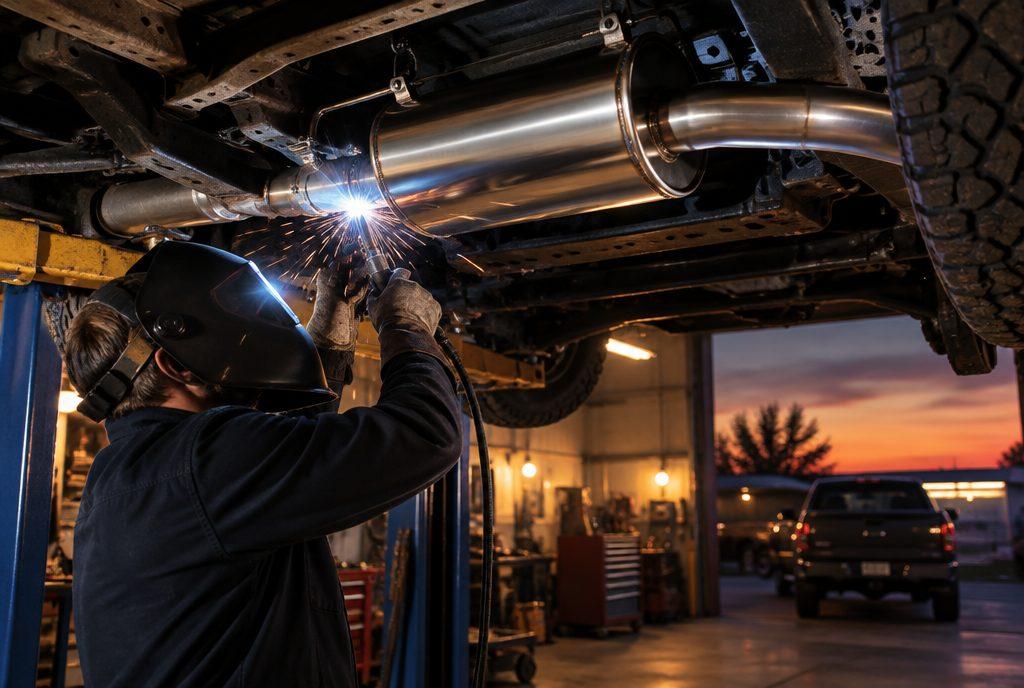
Michigan has no emissions test today, so it's easy to forget these parts are there. They still matter. The same parts that clean up the exhaust also keep the engine running smoothly and using less gas, and when one fails, the check engine light is usually the first sign.
Catalytic converter
The converter sits in the exhaust pipe and turns carbon monoxide, unburned fuel and nitrogen oxides into less harmful gases. A failing one often sets code P0420. You might also notice a rotten-egg smell, a rattle from under the car, or an engine that feels choked on the highway. Converters rarely fail on their own. A misfire or an engine that burns oil is usually what kills them, so the cause needs fixing too.
Converters are also stolen for the metals inside. If your car suddenly roars when you start it, look underneath before you drive anywhere.
Oxygen sensors
Oxygen sensors in the exhaust tell the computer whether the engine is burning too much fuel or too little. The ones ahead of the converter control the fuel mixture. The ones after it check that the converter is working. A worn sensor costs you gas mileage and can set a converter code on a converter that is fine, which is why we test before replacing either.
EGR valve
The exhaust gas recirculation valve sends a small amount of exhaust back into the engine to lower combustion temperature. That cuts nitrogen oxides. When the valve clogs with carbon or sticks open, you get a rough idle, pinging under load, or stalling at stops. Code P0401 means the flow is too low.
PCV valve
The PCV valve pulls blow-by gases out of the crankcase and burns them in the engine instead of venting them to the air. It's a small, inexpensive part. When it clogs, pressure builds inside the engine and pushes oil past seals and gaskets, so you see oil leaks, more oil use and sludge.
EVAP system
The EVAP system traps gasoline vapor from the fuel tank in a charcoal canister and feeds it to the engine later. A leak anywhere in it turns on the check engine light, with codes such as P0455 or P0456. The most common cause is a gas cap that is loose or has a cracked seal. After that come the purge valve and vent valve.
Check your warranty first
If your car is under 8 years old and under 80,000 miles, federal law requires the manufacturer to cover a defective catalytic converter or engine computer. That doesn't cover theft, or damage from skipped maintenance. If your car is inside that window, ask the dealer before you pay for the repair.
How we find the problem
The check engine light code read is free at all 8 Redford Auto Repair shops, and so is the exhaust inspection. The code tells us which system to look at. It doesn't tell us which part to replace, so if it needs more testing, you get a quote for that first.